
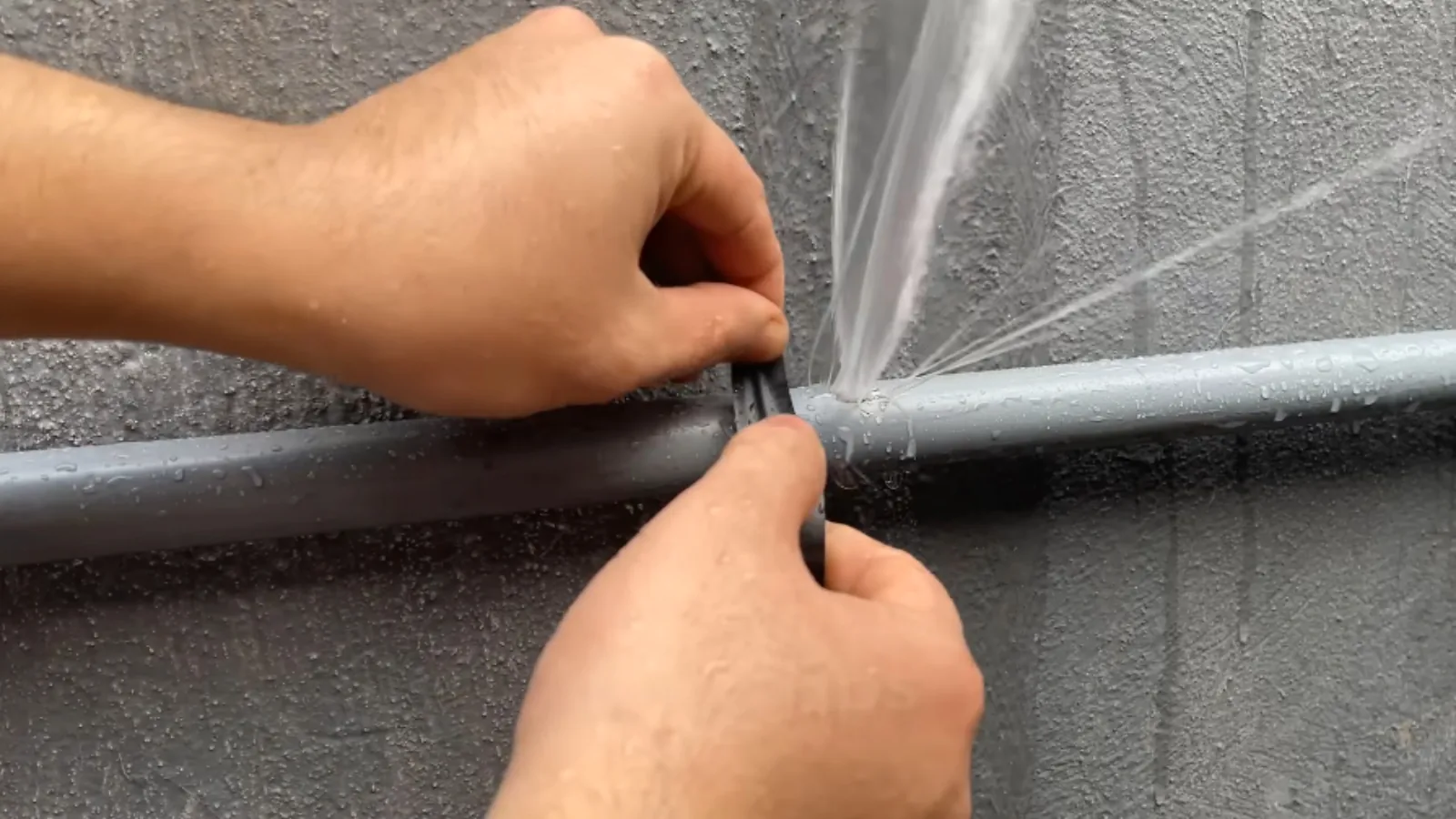
A Pipe Just Burst: Do This First
Close the main shutoff valve, usually near where the water line enters the house and the meter, by turning it clockwise. If you cannot find it, close the valve at the street only if you can safely reach it, and call the city's Public Works at 847-963-0500 on weekdays for help. Then open the lowest faucet and flush an upstairs toilet to drain the lines.
Switch off power to any wet room at the breaker if you can do so without stepping in water. Move valuables up, photograph the damage and call the 24/7 line. If the ceiling is bulging with water, keep clear of the area.
What Happens When We Arrive
- 1
Confirm the shutoff
The plumber checks that the water is off and finds the damaged section.
- 2
Assess the damage
The plumber looks at the burst section and nearby pipe, since the pipe near a burst is often weak.
- 3
Price and approve
You get a clear price before work starts for the repair.
- 4
Repair and test
The pipe is repaired or replaced, then the system is repressurized and checked for leaks.
Why Pipes Burst in Northern Illinois
Water expands when it freezes, and the pressure builds in the section of pipe between the ice and a closed faucet. The pipe usually splits where the pressure peaks, which is often not where the ice formed. Pipes in exterior walls, crawlspaces, garages and unheated basements are most at risk during a cold snap.
Not every burst is a freeze. Corrosion in older galvanized pipe, high water pressure and a failed fitting can all cause a rupture. A plumber looks at the failure to decide whether it is a single defect or a sign that the pipe is near the end of its life.
Repair, Reroute or Replace
| Option | When it fits | What to expect |
|---|---|---|
| Cut out and replace the damaged section | One split in otherwise sound pipe | Fastest, and limits the opening in the wall |
| Reroute around the damage | The section is hard to reach or keeps failing | New pipe through an easier path |
| Replace the run | The pipe is corroded or several sections are failing | Larger job, but one repair instead of many |
| Whole-house repipe | The pipe type is failing throughout the house | A planned project that can follow emergency stabilization |
Pipe Burst Right Now?
Call the 24/7 line. Same-day appointments are offered when available, and you hear the price first.
Frozen Pipes That Have Not Burst Yet
If a pipe is frozen but not split, you may see no water at a tap while the rest of the house works. Open that tap, then warm the pipe slowly with a hair dryer or towels soaked in warm water, moving from the faucet back toward the frozen section. Never use an open flame.
If you see a crack or hear water once the pipe thaws, shut off the main right away. A thawed pipe often starts leaking where it split, and the water that was locked behind the ice is released all at once.
Copper, PEX and Galvanized Pipe
Copper splits along its length when it freezes and can sometimes be repaired with a coupling. PEX is more flexible and can survive freezing better, though fittings can still fail. Galvanized steel, which is common in older homes, corrodes from the inside and tends to fail at threaded joints, so a burst in an old galvanized line often means the rest is not far behind.
If your home was built between 1950 and 1980, which describes most of the housing in Rolling Meadows according to the city's comprehensive plan, ask the plumber what material the burst pipe is. That answer shapes whether a repair or a repipe is the sensible plan.
Dealing With the Water Afterward
Once the burst is repaired, drying matters as much as plumbing.
- Remove standing water quickly and open windows or run fans to move air
- Photograph all damage before you move anything, and keep damaged items for the adjuster
- Call your insurer early, since many policies cover sudden pipe bursts but not long-term seepage
- Watch for mold in damp drywall, carpet and cabinets over the next few days
- Ask the plumber to document the cause on the invoice for your claim
What Affects the Price
Burst pipe repairs vary widely because the damage and the access vary.
Most homeowners policies cover sudden burst pipes, though terms differ, so read yours. Want your real number? Call (847) 281-8626.
Sources and Local Rules Behind This Page
Plumbing work in Illinois is governed by the Illinois Plumbing Code, 77 Ill. Adm. Code 890, which municipal inspectors enforce, and the Illinois Department of Public Health licenses plumbers. The housing age notes here come from the City of Rolling Meadows 2018 comprehensive plan, according to which most housing was built between 1950 and 1980.
We name these sources so you can check them yourself. Rules and phone numbers change, so confirm with the city office or the state before you rely on any detail for a permit or a purchase.
Common Questions
Yes. The emergency line is open 24 hours a day, every day, and a burst pipe is exactly what it is for.
It is usually where the water line enters the house, often in the basement near the meter. Find it before you need it and test that it turns.
Call us and Public Works. The city can advise on the shutoff at the street, and dispatch will walk you through other ways to limit the water.
You can warm it slowly with a hair dryer if it has not cracked. If you see a crack or hear water after thawing, shut off the main and call.
Many policies cover sudden bursts and the resulting damage, but not slow leaks or maintenance issues. Call your insurer and document everything.
Keep heat on in all areas, insulate exposed pipes and let a faucet drip during a hard cold snap. See leak detection if you suspect a hidden problem.
Still not sure what you are dealing with? Call (847) 281-8626 and describe it to our dispatcher.