
Sewer Backup: What to Do First
Stop all water use, including laundry and dishwashers. Do not flush toilets. Every fixture drains to the same line, and anything you add can come up in the lowest drain in the house.
Then make the right first call. Rolling Meadows Public Works can check the city main at no cost, and its number is 847-963-0500 on weekdays, with a non-emergency police line at 847-255-2416 after hours. If the main is clear, the problem is on your side of the property line, and that is where we come in.
Who Is Responsible for Which Part
| Part of the line | Who owns it | First call |
|---|---|---|
| Pipes inside the house | Homeowner | Plumber |
| Lateral from the building to the main, including under the easement | Homeowner, per the city | Plumber, after checking with Public Works |
| Sewer main in the street | City of Rolling Meadows | Public Works |
The city's guidance says the owner's responsibility ends where the lateral meets the main. Knowing that boundary can save you from paying to clear a blockage that was never on your property.
Signs of a Damaged Sewer Line
Repeat clogs in the lowest drains
A broken or sagging pipe collects debris at the same spot, so the clog keeps returning after cabling.
Sewage smell in the yard or basement
A cracked line can leak into soil or release gas near the foundation.
Soggy or sunken lawn patches
Wastewater escaping from a crack can soften the ground above the pipe.
Gurgling and slow drains throughout
A partial collapse or heavy root mass restricts the whole line.
How We Find the Break
A sewer repair starts with a camera. A small waterproof camera on a flexible cable travels the line and records cracks, roots, bellies and offset joints, and shows how far from the cleanout the problem is. Our sewer inspection page explains the process and what you can ask to see.
Seeing the line matters because it changes the repair. A single root-filled joint may need a spot fix, while a long run of cracked clay pipe may need lining or replacement. A plumber who guesses without a camera can dig in the wrong place.
Repair Options Compared
| Option | Best when | Trade-off |
|---|---|---|
| Spot repair | One short damaged section | Needs digging at that spot, and other weak sections remain |
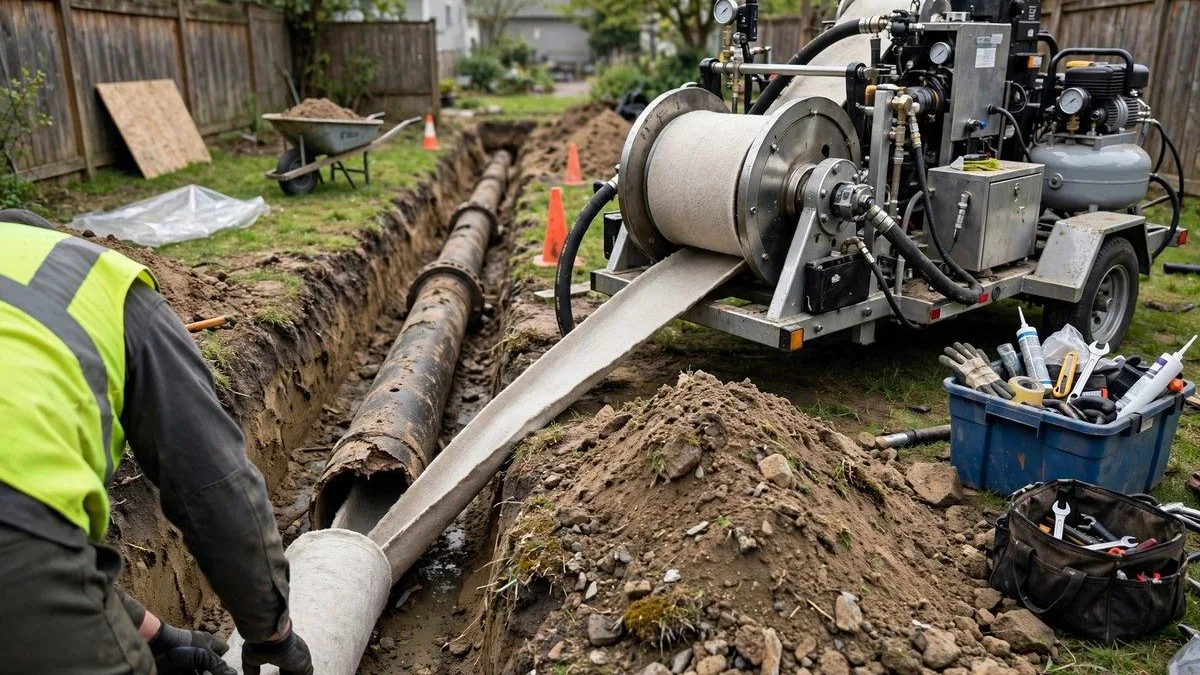
| Pipe lining | A long run with cracks or root entry but a pipe that is still intact | The existing pipe must be cleaned and stay round enough, and it cannot fix a collapsed section |
| Full replacement | Collapsed, badly offset or very old pipe | More work and more cost, but a new line with a long service life |
Sewer Backing Up?
Call the 24/7 emergency line after you have phoned Public Works. Dispatch will tell you what a same-day appointment looks like.
Roots, Age and Rolling Meadows Soil
Rolling Meadows has mature trees on many residential streets, and the city's sewer guide says tree roots can grow into open pipe joints and that large trees over the lateral should be disclosed to the contractor. Roots enter at a joint, then thicken and trap debris, and the line backs up more often each year.
Homes built between 1950 and 1980, which is most of the housing here, may have older lateral materials that have been in the ground a long time. A camera shows the actual condition, and that tells you whether a cleaning is enough or a repair is worth planning before the next backup.
Permits and the Right of Way
The city's guide says a city permit is required before most sewer work, and it must be obtained before the work begins. It also says the city will not start a right-of-way repair until a six-inch cleanout is installed or rodding has been attempted, and that blockages found in the right of way are invoiced to the owner if the city's contractor clears them.
Because the rules affect timing and cost, we explain which permits apply before work starts. Then you can decide on the repair with the full picture instead of finding out about a permit mid-job.
What Affects the Price
Sewer repair cost depends heavily on what the camera finds. A short spot repair and a long replacement are very different projects.
Homeowners insurance often excludes sewer line repair itself, though some carriers offer an endorsement. Check your policy. Want your real number? Call (847) 281-8626.
Sources and Local Rules Behind This Page
Plumbing work in Illinois is governed by the Illinois Plumbing Code, 77 Ill. Adm. Code 890, which municipal inspectors enforce, and the Illinois Department of Public Health licenses plumbers. The ownership and cleanout guidance here comes from the City of Rolling Meadows sewer guide, according to which the owner maintains the lateral to the main.
We name these sources so you can check them yourself. Rules and phone numbers change, so confirm with the city office or the state before you rely on any detail for a permit or a purchase.
Common Questions
Yes. The emergency line is open 24/7, including holidays. Describe the backup and dispatch will explain the next step, including whether to call Public Works first.
The City of Rolling Meadows asks residents to call Public Works first, because the city checks its main at no cost. If the main is clear, call us for the lateral on your side.
We strongly recommend it. The camera shows where the damage is and what kind it is, which determines whether a spot repair, lining or replacement makes sense.
It depends on the material, soil and tree roots. Rather than guess an age, a camera look shows the real condition of your line.
Not unless needed. Lining and spot repairs limit digging, and the plumber explains which method fits before you approve the price. See drain cleaning if the problem turns out to be a simple clog.
Still not sure what you are dealing with? Call (847) 281-8626 and describe it to our dispatcher.