
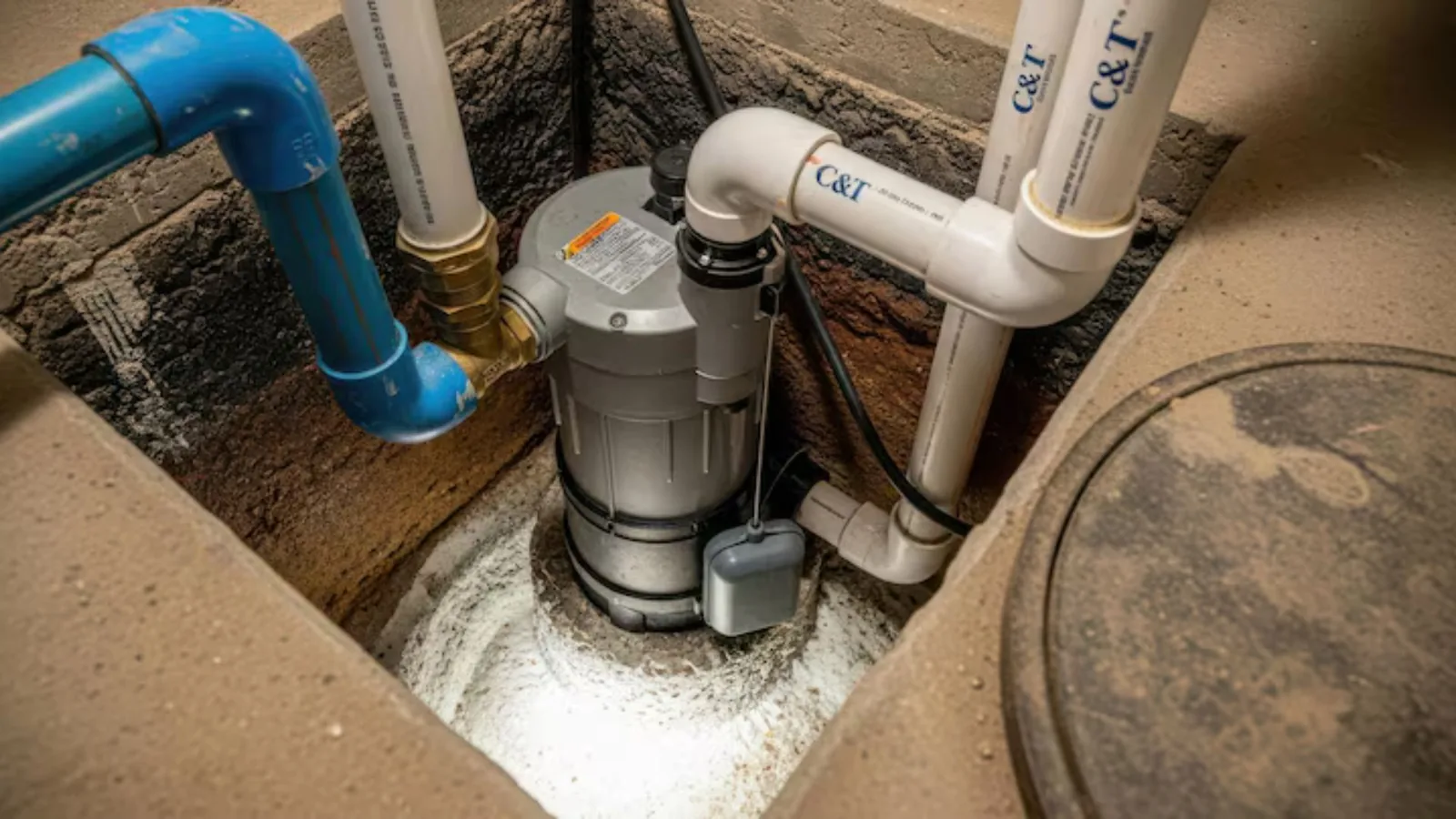
Pump Not Working and Water Rising
Do not step into standing water if the basement outlets, panel or appliances may be energized. If the water is near electrical equipment, stay out and call the electric utility or 911. If it is safe, check whether the pump has power, whether the float moves freely and whether the discharge line is clear.
Move belongings off the floor and photograph the water for your insurer. A sump pump failure is time sensitive, and the sooner a pump or backup is running, the less cleanup you will face.
Sump Pump Problems and Fixes
| Problem | Likely cause | Typical fix |
|---|---|---|
| Pump does not start | No power, tripped breaker or a stuck float | Reset power, free the float or replace the switch |
| Pump runs constantly | Stuck float, failed check valve or very high groundwater | Adjust or replace the float or valve |
| Pump runs but moves little water | Clogged intake or impeller, or frozen or blocked discharge | Clean the pump and clear the discharge |
| Loud rattling or grinding | Worn bearings or debris in the impeller | Replace the pump |
| Water backs into the pit after cycling | Failed check valve | Replace the check valve |
| Pump works but fails in outages | No backup power | Add a battery backup or water-powered backup |
Basement Taking On Water?
Call the 24/7 line. Same-day appointments are offered when available, and you hear the price first.
Why Sump Pumps Matter Here
Rolling Meadows sits along Salt Creek, and the city maintains more than 54 miles of storm sewer that drains toward it. The city also operates storm water facilities, including Plum Grove Reservoir and Twin Lakes Reservoir, to manage heavy rain. Storms that stress those systems are also the ones that load a household sump pump.
The city's guidance for standing water is to wait up to 48 hours for it to drain before treating it as a storm sewer problem. A basement is a private matter, though, and a sump pump is the home's own defense. If your pump is old, noisy or cycling constantly, it is worth testing before the next heavy storm.
How We Service a Sump Pump
- 1
Test the pump
The plumber runs water into the pit and watches the float, the pump and the check valve.
- 2
Check the discharge
The outlet line is traced and checked for blockage, freezing and proper drainage.
- 3
Price and approve
You get a clear price before work starts for a repair or replacement.
- 4
Replace or repair
The part or pump is installed and the cycle is tested again.
Battery Backup and Power Outages
Storms that overload a pump often knock out power at the same time. A battery backup pump, or a water-powered backup where it is permitted and the water supply is adequate, can keep a basement dry during an outage. Backups need testing and eventual battery replacement.
Ask the plumber about the right size and a plan for testing. A backup that is never tested may not work when needed. The basement waterproofing page covers other ways to manage groundwater.
Discharge: Where the Water Goes
A sump pump discharge should send water away from the foundation and not into the sanitary sewer. Pumping groundwater into a sanitary sewer is generally restricted because it overloads the sewer system, and local rules apply. The Metropolitan Water Reclamation District's Watershed Management Ordinance of 2014 is the regional framework for storm water in Cook County.
Ask the plumber where your discharge goes and whether it ends far enough from the house. A line that freezes in winter or that dumps water beside the foundation will undo the pump's work.
What Affects the Price
Sump pump work depends on the problem and the pump.
Insurance often excludes water from a failed sump pump unless a specific rider is in place. Check your policy. Want your real number? Call (847) 281-8626.
Sources and Local Rules Behind This Page
Plumbing work in Illinois is governed by the Illinois Plumbing Code, 77 Ill. Adm. Code 890, which municipal inspectors enforce, and the Illinois Department of Public Health licenses plumbers. The storm water notes here come from City of Rolling Meadows storm sewer guidance and the Metropolitan Water Reclamation District Watershed Management Ordinance of 2014, according to which storm water is regulated across Cook County.
We name these sources so you can check them yourself. Rules and phone numbers change, so confirm with the city office or the state before you rely on any detail for a permit or a purchase.
Common Questions
Yes. The emergency line is open 24/7, including during storms.
A stuck float, a failed check valve or high groundwater can all cause it. A plumber can test each.
If outages often come with storms, a backup is a reasonable precaution. The plumber can size one for your pit.
Generally no. Ask the plumber and your municipality, since local rules apply.
It depends on use and quality. A pump that is old, noisy or cycling constantly is worth testing before storm season.
Still not sure what you are dealing with? Call (847) 281-8626 and describe it to our dispatcher.